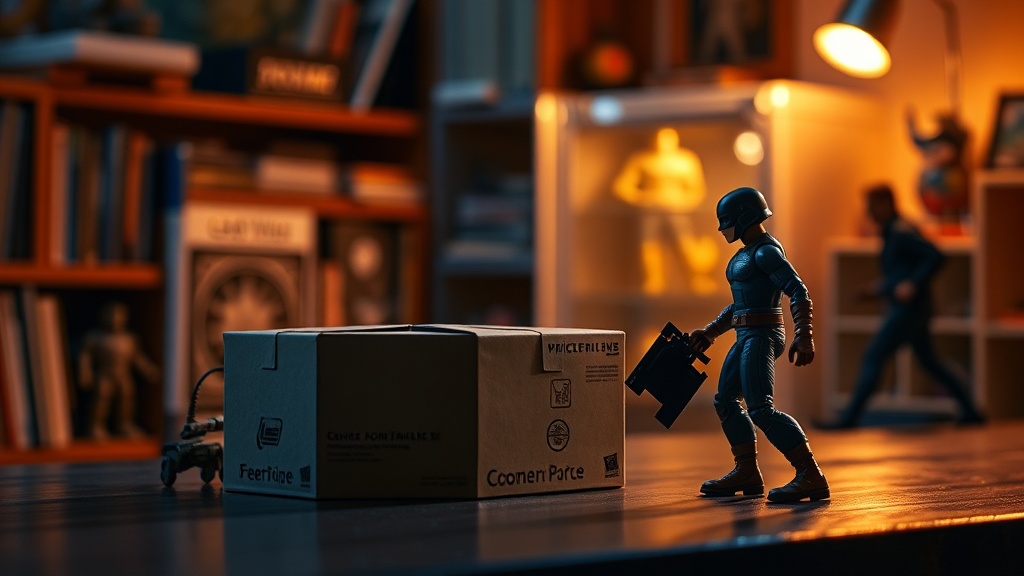
The Box Is Not the Figure: A Smarter Keep-or-Toss Rule for Collectors

A sealed box doesn’t automatically make an action figure more collectible, and an opened figure isn’t automatically doomed. This covers a practical way to decide which packaging deserves storage space, which boxes can be flattened, and which ones are safe to let go. It matters because box decisions quietly shape a collection’s cost, room footprint, resale options, and day-to-day enjoyment.
Collectors tend to treat packaging like a moral test. Keep every box and you’re serious. Toss one and you’ve somehow failed the hobby. That thinking sounds disciplined, but it gets messy fast. Modern lines can produce wide, deep, windowless, plastic-free, slipcovered, deluxe, exclusive, and shipper-boxed releases all in the same year. A collector who buys steadily can end up caring for a second collection made entirely of cardboard.
The better question is not whether boxes matter. They do. The question is when they matter enough to earn space. Packaging can protect a figure, prove completeness, preserve art, support resale, and make a shelf feel like a curated archive. It can also become dead volume that crowds closets, traps dust, hides moisture issues, and makes moving a collection harder than it needs to be. The job is to separate packaging with real future value from packaging you’re keeping out of habit.
Should action figure collectors keep every box?
No, not every box. Keep the boxes that do a job you can name. If a box protects a fragile accessory layout, documents a limited edition, carries strong display art, or makes resale meaningfully easier, it has a case. If it is a plain retail carton for a common figure you already display loose and don’t plan to sell, it may not be earning its square footage.
Start with a four-part test: rarity, completeness, condition, and storage burden. Rarity asks whether the release is hard to replace or tied to a narrow buying window. Completeness asks whether the packaging holds trays, instructions, stands, effect parts, or alternate hands that would be easy to lose. Condition asks whether the box is clean, square, and displayable, not crushed beyond use. Storage burden asks whether keeping it creates a real cost in your home.
That last point gets ignored because collectors like to imagine space as free. It isn’t. Every box you keep takes room from figures, tools, lighting, risers, books, cases, and breathing space. If a box is common, damaged, and not tied to a figure you may sell, keeping it can be a bad trade.
A simple rule works well: keep packaging for premium imports, numbered exclusives, convention releases, vintage-carded items, high-end sixth-scale figures, statues with fitted foam, and anything with parts that are difficult to store safely loose. Be more selective with mass retail boxes, especially when the packaging is oversized, repeated across the line, or bland enough that it doesn’t add much display value.
Does keeping the box increase action figure value?
Often, but not evenly. A complete boxed figure usually sells more easily than a loose figure, yet the size of that premium depends on the line, age, audience, and condition. Some buyers want the whole presentation. Some only want the character for display. Some care about the shipper. Some care more about tight joints, paint, and unbroken accessories than about cardboard.
Packaging affects value most when it proves the figure is complete. Trays, inserts, instruction sheets, character cards, tamper seals, plastic clamshells, and numbered certificates give buyers confidence. That confidence matters in lines with many tiny parts. A loose figure with missing alternate hands, damaged weapons, or no stand can become harder to price because the buyer has to check every photo and ask follow-up questions.
Box condition also matters, but collectors sometimes overrate mildly imperfect packaging. A clean box with light shelf wear is still useful. A box with heavy sun fade, damp smell, soft corners, torn flaps, crushed windows, or tape repairs may add less value than expected. For some buyers, a damaged box is still better than no box. For others, it is clutter they don’t want to pay to ship.
Look at actual sold listings before giving a box too much power. Asking prices can be fantasy. Sold prices show what buyers accepted. Compare the same figure loose, complete loose, opened with box, and sealed when possible. The gap between those groups tells you whether that packaging deserves premium storage in your home.
There is another value that doesn’t show up in sale price: confidence when you move or reorganize. Original trays and foam can make a fragile figure easier to pack. That benefit matters even if you never sell. It is especially true for figures with thin antennas, soft goods, capes, effect parts, wings, clear plastic pieces, or paint that rubs easily.
What boxes are worth saving first?
Save packaging that would be hard to recreate. That includes sculpted clamshells, fitted foam, numbered certificates, mailer shippers with edition labels, window boxes with original art, and package designs that define the release. A vintage-style card back with original art is not just a container. It is part of the object’s cultural appeal.
Boxes for premium import figures deserve special attention because they often contain labeled trays and tiny accessories. The same goes for sixth-scale figures, where packaging may include foam layers, tissue, accessory cards, instruction sheets, and character-specific presentation. In those cases, tossing the box can make future transport annoying and reduce buyer trust if you ever move the piece along.
Exclusive packaging is another strong keep. Convention stickers, store-exclusive sleeves, numbered edition cards, and alternate art boxes can matter even when the figure itself is similar to a standard release. The packaging is part of the edition. If you toss it, you may still own the figure, but you’ve changed the nature of the collectible.
Artist-driven packaging also deserves respect. Some modern releases treat box design as part of the figure’s identity: wraparound illustration, comic-panel interiors, die-cut windows, character bios, or photography that collectors recognize immediately. If the package looks good enough to display behind the figure, it is probably worth keeping.
By contrast, repeated generic boxes can be candidates for flattening or recycling after you remove inserts, instructions, and accessories. If ten figures in a line use nearly identical cartons and only the name strip changes, you may not need ten full boxes taking up a shelf. Keep the best examples, keep the inserts that matter, photograph the rest, and make a deliberate call.
How should you store action figure packaging safely?
Cardboard, plastic windows, tape, stickers, and foam do not age the same way. Packaging should be kept dry, dark, cool, and away from pressure. Stacks that seem stable today can bow boxes over time. Clear windows can scuff. Glossy printed surfaces can stick to neighboring boxes if heat and humidity get involved.
Museum guidance lines up with what experienced collectors learn the hard way. The Library of Congress preservation FAQ recommends stable plastics such as polyethylene, polypropylene, or polyester for storage and warns against basements, attics, and garages for valuable objects because those spaces often have poor temperature and humidity control. That advice fits collector packaging too. A sealed bin in a hot garage can still become a bad environment.
The Canadian Conservation Institute’s guidance on rubber and plastic objects is also useful for figure collectors because packaging often mixes paperboard, clear plastic, foam, rubbery ties, and adhesives. Their advice points toward low light, lower heat, controlled humidity, and regular checks for sticky surfaces, odors, cracking, or other signs of aging.
Use boxes or bins that are clean, rigid, and not overloaded. Store packaging upright when possible, like records or books, rather than under heavy stacks. If you must stack, put the strongest boxes at the bottom and avoid crushing window fronts. Keep silica gel packs only if you understand when to replace or recharge them; a neglected humidity control plan can become theater rather than protection.
Label bins by line and scale. That sounds dull until you need one box quickly. A bin labeled Marvel Legends 2023-2024 or SH Figuarts Dragon Ball beats six mystery tubs. Put small loose inserts, cards, and instruction sheets into labeled polyethylene or polypropylene bags. Avoid PVC sleeves and unknown soft plastics for long-term storage; the National Park Service Museum Handbook is a good starting point for broader collection care thinking, including storage, handling, environment, and planning.
Can you flatten boxes without ruining collector value?
Sometimes. Flattening can be a smart middle path for boxes that have nice art but low structural value. It saves space while preserving the printed surfaces and barcode information. It is not ideal for boxes with windows, glued trays, premium finishes, embossing, fragile tabs, or complex inserts. It is also a poor choice for high-end releases where buyers expect the full presentation.
If you flatten, do it carefully. Open tabs slowly. Don’t force glued seams unless the box was designed to collapse. Keep the flattened pieces in a rigid portfolio, archival-style box, or clean lidded bin where corners won’t curl. Put a note with the figure name, release year, and any missing inserts. Photograph the box before and after so you have a record of its original state.
For common retail packaging, flattening can be better than keeping nothing and better than keeping everything. It gives you art, proof of release, UPC information, and character copy without preserving air. For rare packaging, sealed packaging, vintage-carded pieces, or boxes with strong resale impact, leave them intact.
What should you do before tossing any action figure box?
Before any box leaves the house, run a quick audit. Remove every accessory tray. Check under cardboard inserts. Look behind backing cards. Look for instructions, effect stands, alternate faces, hands, weapons, batteries, adapters, sticker sheets, capes, cloth goods, and tiny clear support arms. Many collectors have thrown away parts because they trusted the obvious tray too much.
Then take photos. Photograph the front, back, sides, barcode, edition sticker, and any authenticity labels. If you ever need to identify the release, those photos help. They also give you a private record for insurance, cataloging, or resale notes. You don’t need a studio setup. Clear phone photos in good light are enough.
Finally, sort the box into one of four decisions: keep intact, flatten, strip for inserts, or recycle. Keep intact when the package has strong value or display merit. Flatten when the art matters more than the structure. Strip for inserts when the box is weak but the trays, instructions, or accessory bags are useful. Recycle when the package is common, damaged, empty, and not helping the figure.
The next time a new figure arrives, make the box decision before the packaging joins the closet pile. Open it cleanly. Remove the figure and parts. Inspect the packaging. Photograph it. Assign it to a bin, portfolio, or recycling stack while the release is still fresh in your head. That five-minute habit prevents the one-year cardboard backlog that turns collecting into unpaid warehouse work.