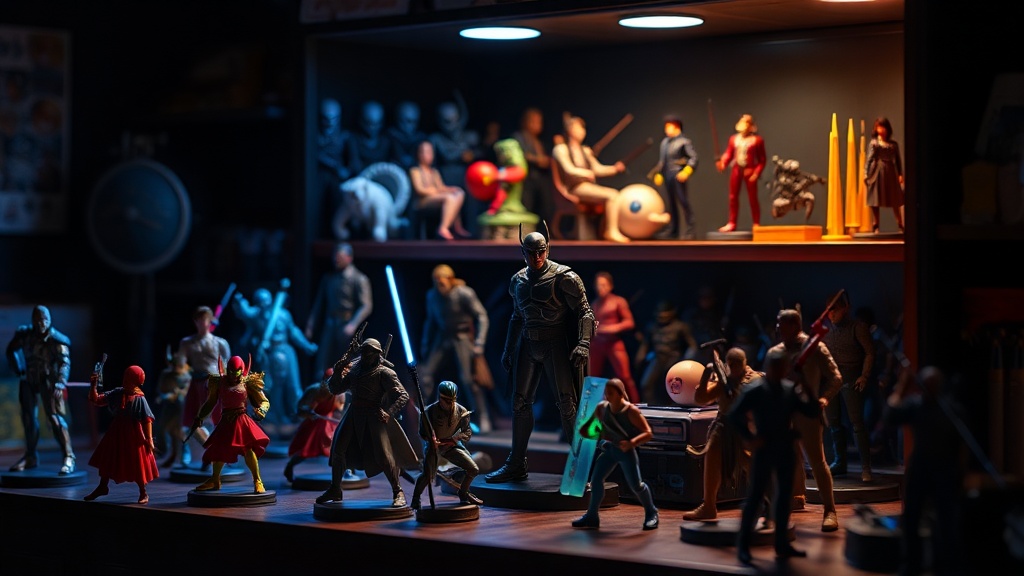
Bringing Your Figures to Light: Why the Right Illumination Transforms Your Collection

Illuminate Your Collection Safely and Stylishly
Proper lighting can dramatically transform how you experience your action figure collection. It isn’t just about making your figures visible; it's about enhancing their sculpted details, making colors pop, and setting the perfect mood for your display. Done right, lighting elevates your collection from a mere assembly of toys to a dynamic, museum-worthy exhibit. This guide will walk you through the types of lighting, optimal placement strategies, and crucial considerations for protecting your prized possessions from potential light damage.
What Kind of Light Best Suits My Display?
Choosing the right light source is the first — and perhaps most important — step in optimizing your action figure display. The market offers a variety of options, but not all are created equal when it comes to both aesthetics and preservation.
- LED (Light Emitting Diode): Hands down, LEDs are the champion for action figure displays. They're incredibly energy-efficient, produce minimal heat, and—critically for collectors—emit virtually no harmful ultraviolet (UV) radiation. This is a game-changer for long-term figure preservation. LEDs also come in a vast range of color temperatures, from warm, inviting glows (around 2700K-3000K) that highlight natural skin tones and rich colors, to cool, crisp whites (5000K+) that emphasize sharp details and futuristic aesthetics. Plus, with smart lighting systems, you can even change colors and brightness on the fly, tailoring the ambiance to specific figures or themes.
- Fluorescent: Once a popular choice for display cases due to their relatively low heat output compared to incandescents, fluorescent lights have fallen out of favor for figure displays. While energy-efficient, they often emit a significant amount of UV light, which can be detrimental to plastics and paint over time. They also tend to have a less natural color rendition and can flicker, detracting from the overall presentation.
- Incandescent (Halogen/Traditional): These bulbs should generally be avoided for action figure displays. They generate a lot of heat, which can—over prolonged exposure—cause certain plastics to become brittle, warp, or off-gas plasticizers, leading to that undesirable sticky residue. More significantly, they emit a broad spectrum of light, including UV, posing a serious risk of fading and discoloration to your figures. While they offer excellent color rendition, the risks far outweigh the benefits for a collector concerned with long-term preservation.
When selecting your lighting, prioritize LEDs with a high Color Rendering Index (CRI)—a measure of how accurately a light source reveals the true colors of objects. A CRI of 90 or above ensures your figures look their best, with vibrant, accurate colors just as the sculptors intended.
Where Should I Position My Display Lights?
Strategic placement of your lighting can make all the difference, transforming a static lineup into a dramatic scene. Think of yourself as a miniature theater director, using light to highlight your stars.
- Top-Down Lighting: This is a common and effective starting point, often achieved with puck lights or LED strips installed in the top of a shelf or display cabinet. It provides general illumination, but be mindful of shadows. Overly direct top-down light can create harsh shadows under chins, arms, and other protruding elements, obscuring details. You can mitigate this by diffusing the light or supplementing with other light sources.
- Front Lighting: Lighting figures from the front helps to fill in shadows created by top-down lights and illuminates facial details and front-facing accessories. LED strips along the front lip of a shelf or small, directional spotlights placed strategically can achieve this. The key here is to avoid glare—position lights so they don't reflect directly into the viewer's eyes or create distracting hotspots on shiny surfaces of your figures.
- Backlighting & Accent Lighting: For a truly dynamic display, consider backlighting. Placing a subtle LED strip behind figures or against the back wall of a display case creates a striking silhouette effect, making your figures pop from their background. Accent lights—small, focused spotlights—can draw attention to a specific figure, a rare accessory, or a particularly detailed sculpt, turning it into a focal point. Experiment with angling these lights to emphasize textures and contours without washing out colors.
- Avoid Direct Sunlight: This isn't a placement of artificial light, but it's a critical lighting consideration. No matter how perfect your artificial lighting setup, direct natural sunlight is your collection's enemy. It’s rich in UV radiation and generates significant heat, both of which accelerate degradation. Position your display cases away from windows or invest in UV-filtering films for windows if direct sunlight is unavoidable in your display area.
Remember, the goal is often a balance. Combine different lighting angles and intensities to create depth and eliminate harsh shadows, ensuring every detail of your figures is presented beautifully.
Can Lighting Damage My Action Figures?
Absolutely, yes. While the aesthetic benefits of good lighting are undeniable, the potential for damage to your collection is a very real concern. This isn't just about direct physical damage like melting; it’s primarily about long-term chemical degradation.
“UV radiation, specifically UV-B, carries enough energy to break the covalent bonds in polymer chains. This is called 'chain scission.' As these chains break, the plastic loses its structural integrity, leading to brittleness and cracking.” –