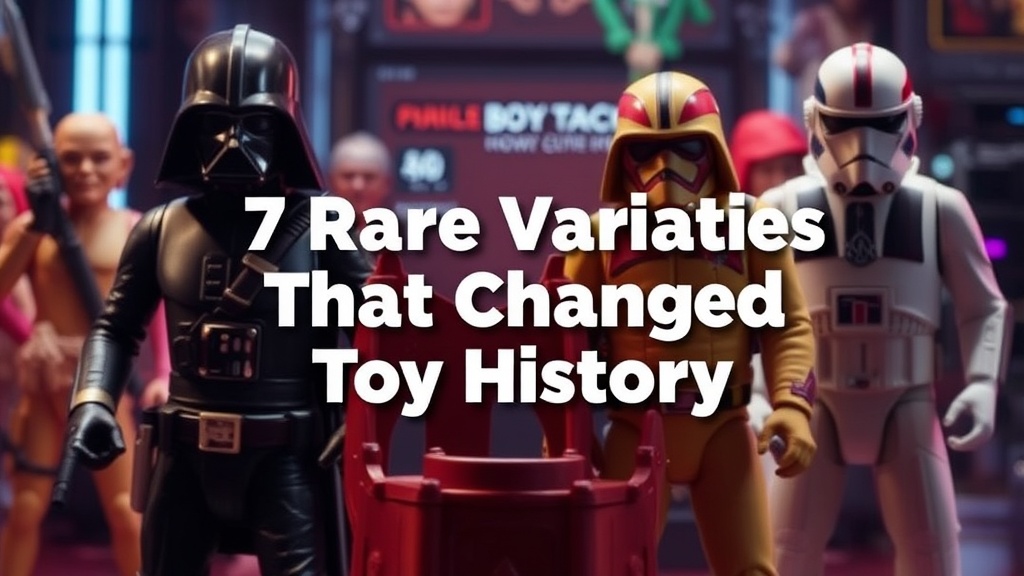
7 Rare Variants That Changed Toy History

The Misprinted Color Swaps
The Unreleased Prototype Models
The Limited Regional Exclusives
The Error Packaging Gems
The Gold Standard Chase Figures
The Prototype Paint Tests
The Convention Exclusive Variants
This article examines seven specific toy variants that shifted market trends, altered collector value, and changed how manufacturers approach production. We'll look at how manufacturing errors, limited production runs, and intentional color swaps created legendary status for certain pieces in the hobby.
Why Do Toy Variants Matter to Collectors?
Toy variants matter because they represent the intersection of manufacturing chance and market scarcity. A standard figure might be worth twenty bucks, but a misprinted version of that same figure can command thousands. This happens when a factory error or a limited production window creates a one-of-a-kind item that wasn't originally intended to be a "chase" piece.
Collectors chase these variants to complete sets or to find the "holy grail" of a specific line. It's a bit of a gamble—sometimes you're hunting for a mistake, and other times you're hunting for a deliberate rarity. Either way, understanding the difference is what separates a casual fan from a serious hobbyist.
For those who already have a collection, keeping these items safe is a different story. If you're hunting for high-value variants, you need to follow a proper care routine to prevent damage. A single scratch on a rare variant can tank the value instantly.
1. The Kenner Star Wars "Blue Snaggletooth"
The Blue Snaggletooth is the most famous example of a production error becoming a legendary rarity. In the early days of the Star Wars line by Kenner, the production team didn't have an accurate photo of the character from the film. As a result, they produced a tall, blue-suited version instead of the short, red-suited version seen on screen.
Because the blue version was only available in certain sets and was eventually replaced by the screen-accurate red version, it became an instant icon. It changed how collectors looked at "error" figures. It wasn't just a mistake; it was a piece of history. It proved that even if a toy was "wrong" according to the movie, it could still be a massive win for the community.
2. G.I. Joe: The "Mickey Mouse" Cobra Commander
The "Mickey Mouse" emblem refers to a specific error on the early Cobra Commander figures from Hasbro. The insignia on the chest was slightly malformed, looking more like a cartoon mouse than a sharp, military emblem. This tiny detail turned a standard figure into a high-end piece for vintage enthusiasts.
It’s a perfect example of how a tiny, almost invisible manufacturing quirk can dictate the price of a toy. Collectors will spend hours under a magnifying glass just to verify if a figure has the "correct" emblem. It's obsessive, sure, but that's the nature of the game.
3. Transformers: The "Pepsi Optimus Prime"
The Pepsi Optimus Prime is a rare variant that showcases how brand partnerships can create instant collector demand. While most Optimus Prime figures are standard, certain promotional versions featured the Pepsi branding. This wasn't a mistake; it was a deliberate marketing tie-in that became a cult classic.
These pieces are often much harder to find in mint condition because they were distributed through much smaller channels than the standard retail-ready toys. It shows that even when a variant is intentional, the distribution method can make it feel like a rare accident.
| Variant Name | Manufacturer | Primary Reason for Rarity |
|---|---|---|
| Blue Snaggletooth | Kenner | Production Error (Color/Height) |
| Mickey Mouse Cobra | Hasbro | Emblem Misprint |
| Pepsi Optimus Prime | Hasbro | Promotional Tie-in |
| Pink He-Man | Mattel | Limited Color Swap |
4. How Much Do Rare Variants Cost?
The cost of a rare variant depends entirely on the level of documented scarcity and the current demand within the community. A "Blue Snaggletooth" might fetch hundreds of dollars, while a highly documented error from a modern line might only be worth a premium over the standard version. You can check recent sales on secondary markets like eBay to see real-time pricing trends.
Price isn't just about the toy itself. It's about the story. A figure that was a mistake is often more expensive than a figure that was a deliberate limited edition. Why? Because the mistake is unpredictable. You can't "plan" to make a mistake, which makes the mistake a true anomaly.
Don't expect a linear price scale. One day, a specific color variant might be the "hot" item in the community, and the next, interest might drop. It's a volatile market—highly dependent on nostalgia and the current "flavor of the month" in the collecting world.
5. The "Pink" He-Man (Mattel)
In the world of Masters of the Universe, certain color-swapped figures have become legendary. The "Pink He-Man" or certain variations of Skeletor changed the way people viewed the "re-release" culture. These weren't just random color swaps; they were often part of specific international releases or very limited production runs.
These variants taught collectors to never assume that every figure in a line will look the same. It taught us to look closer at the plastic. Sometimes, a slight change in the hue of the skin or the color of the armor can turn a $15 toy into a $150 centerpiece. It's a thrill that keeps us hunting.
6. Star Wars: The "Double Telescoping" Lightsaber
This is perhaps the most technical variant in history. Early versions of the Kenner Star Wars figures featured a lightsaber that could actually extend—a "double telescoping" mechanism. However, the mechanism was fragile and expensive to produce, so Kenner quickly switched to the single-piece saber we all know.
Finding a figure with the original, functional double-telescoping saber is a massive achievement. It represents a moment where the technology of the toy was actually *too* advanced for the mass-market production lines of the time. It’s a tiny piece of engineering history that lives inside a piece of plastic.
7. Marvel Legends: The "Baf" Variants
The "Build-A-Figure" (BAF) concept used by Hasbro for the Marvel Legends line changed the way people buy entire waves of figures. By including a piece of a larger figure in every single box, they forced collectors to buy the whole set. This created a unique kind of "variant" where the value of the individual figure is tied to the completion of the larger one.
While not a "mistake" like the Blue Snaggletooth, it is a structural variant that changed the economics of collecting. It turned a single-purchase hobby into a long-term commitment. You don't just want the figure; you want the pieces that come with it. It’s a clever way to keep the community engaged and the shelves moving.
Looking at these seven examples, one thing is clear: the most interesting things in collecting are often the things that weren't supposed to happen. Whether it's a mistake, a specialized marketing stunt, or a technical limitation, these variants define the history of the industry. They turn simple toys into historical artifacts.